MercadoLibre
The store became a bank. Now comes the test.
MercadoLibre keeps building what its customers need next. The harder question is when that reinvestment becomes cash its owners can keep.
In the systemStores & marketplacesWarehouses & robotsShipping & deliveryCheckout & paymentsReinvestors portfolioWhere it sits ↓
Model updated on
THE STORY IN PICTURES
The rails made the marketplace. What do they cost?
Follow one merchant from the listing to the loan, then test what reaches the owner.
 Enlarge graphic
THE STARTING POINT
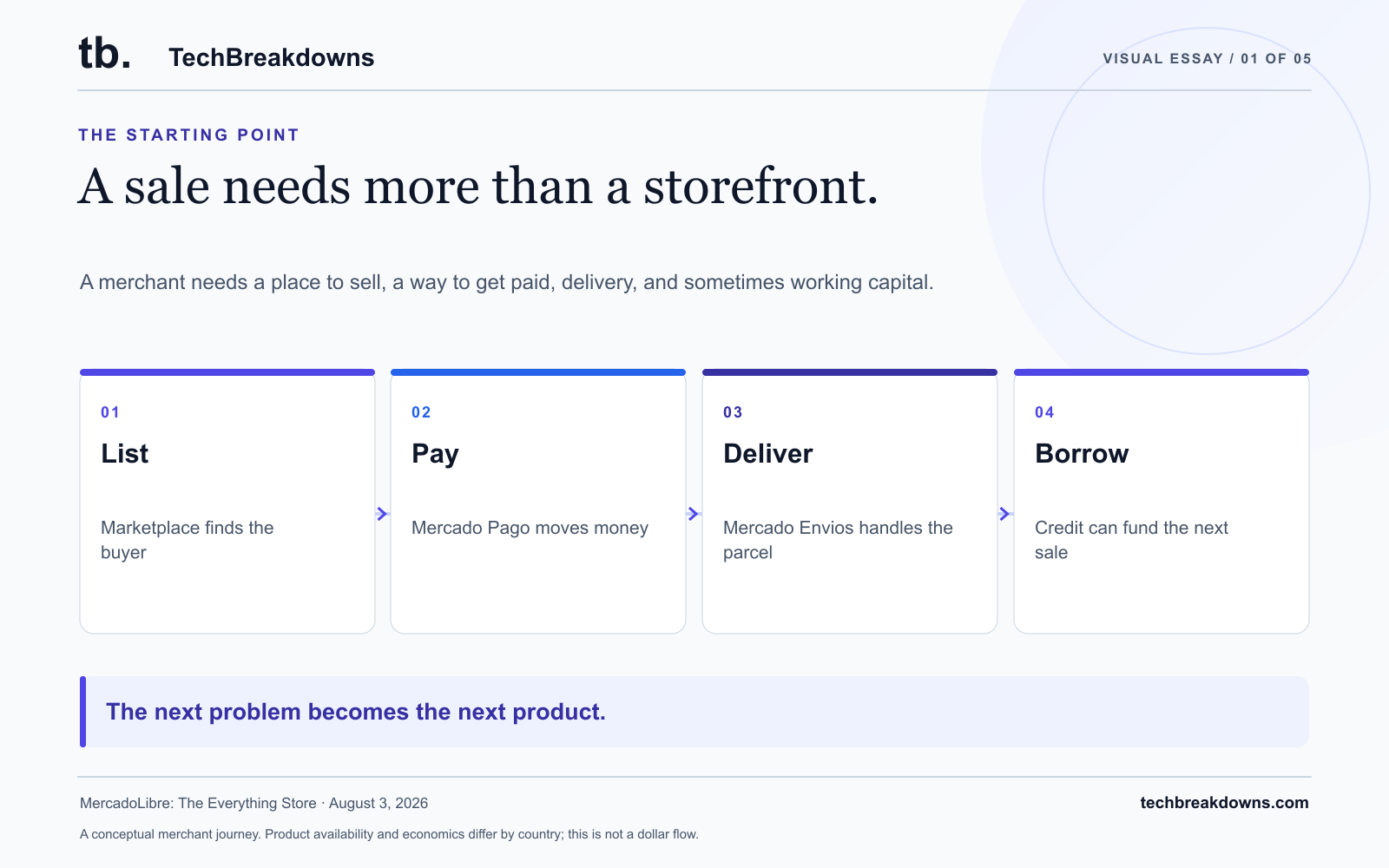
A sale needs more than a storefront.
A merchant needs a place to sell, a way to get paid, delivery, and sometimes working capital. MercadoLibre built those missing rails around the transaction.
A conceptual merchant journey. Product availability and economics differ by country; this is not a dollar flow.
 Enlarge graphic
HOW IT REINFORCES ITSELF
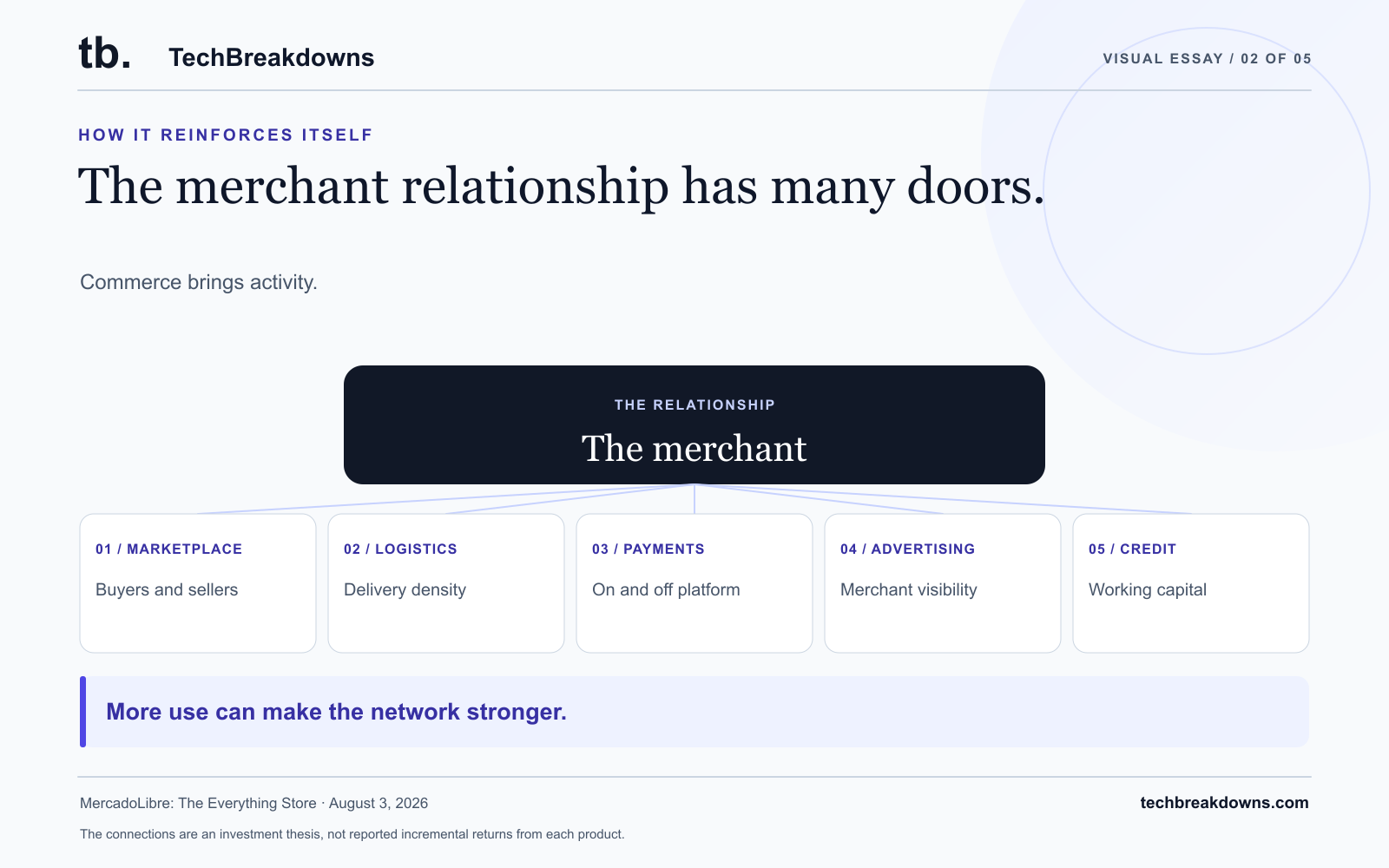
The merchant relationship has many doors.
Commerce brings activity. Payments, delivery, advertising and credit can deepen the same relationship rather than operating as isolated products.
The connections are an investment thesis, not reported incremental returns from each product.
 Enlarge graphic
THE BUSINESS MODEL
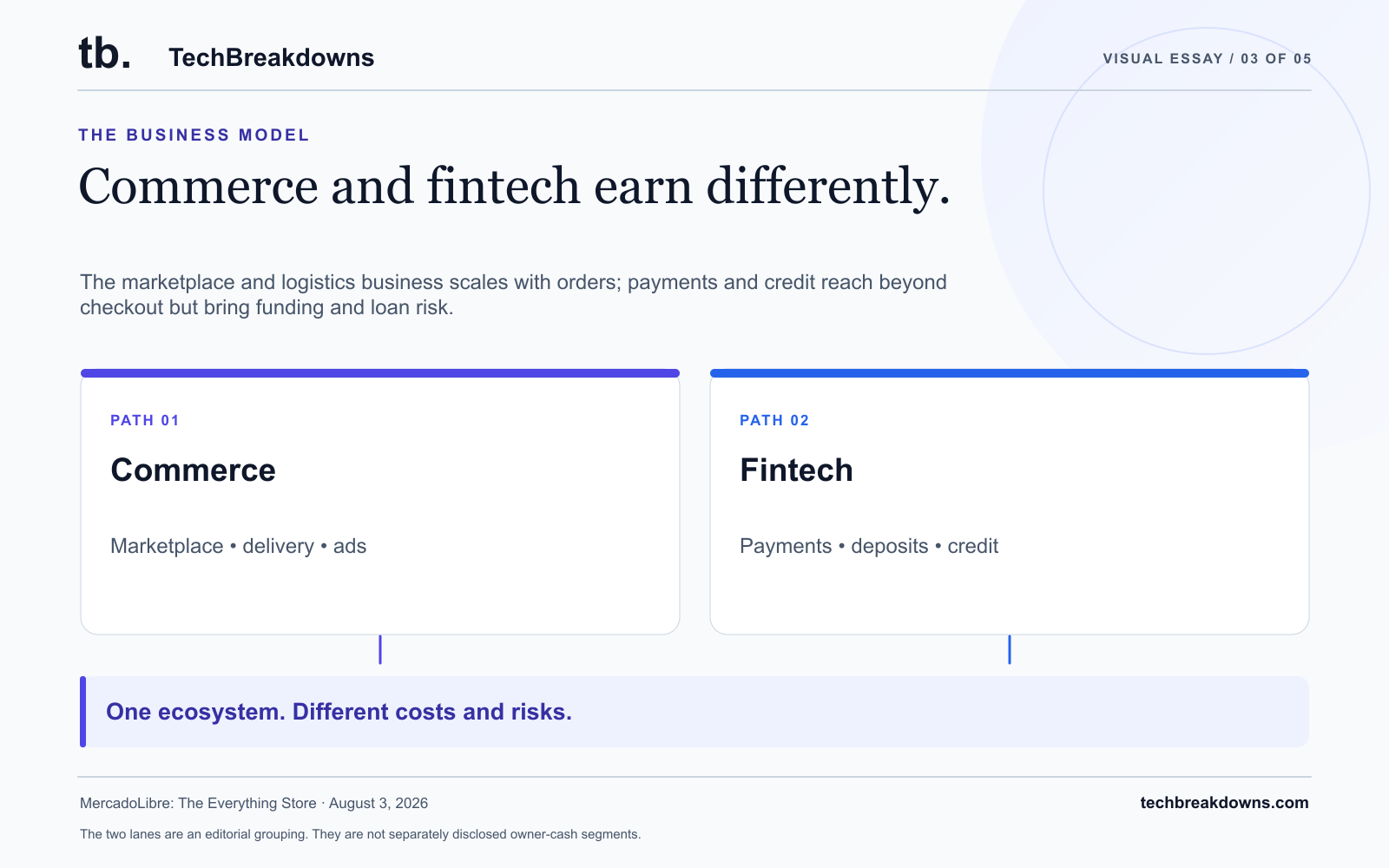
Commerce and fintech earn differently.
The marketplace and logistics business scales with orders; payments and credit reach beyond checkout but bring funding and loan risk. Both matter to the same owner.
The two lanes are an editorial grouping. They are not separately disclosed owner-cash segments.
 Enlarge graphic
THE ECONOMIC TENSION
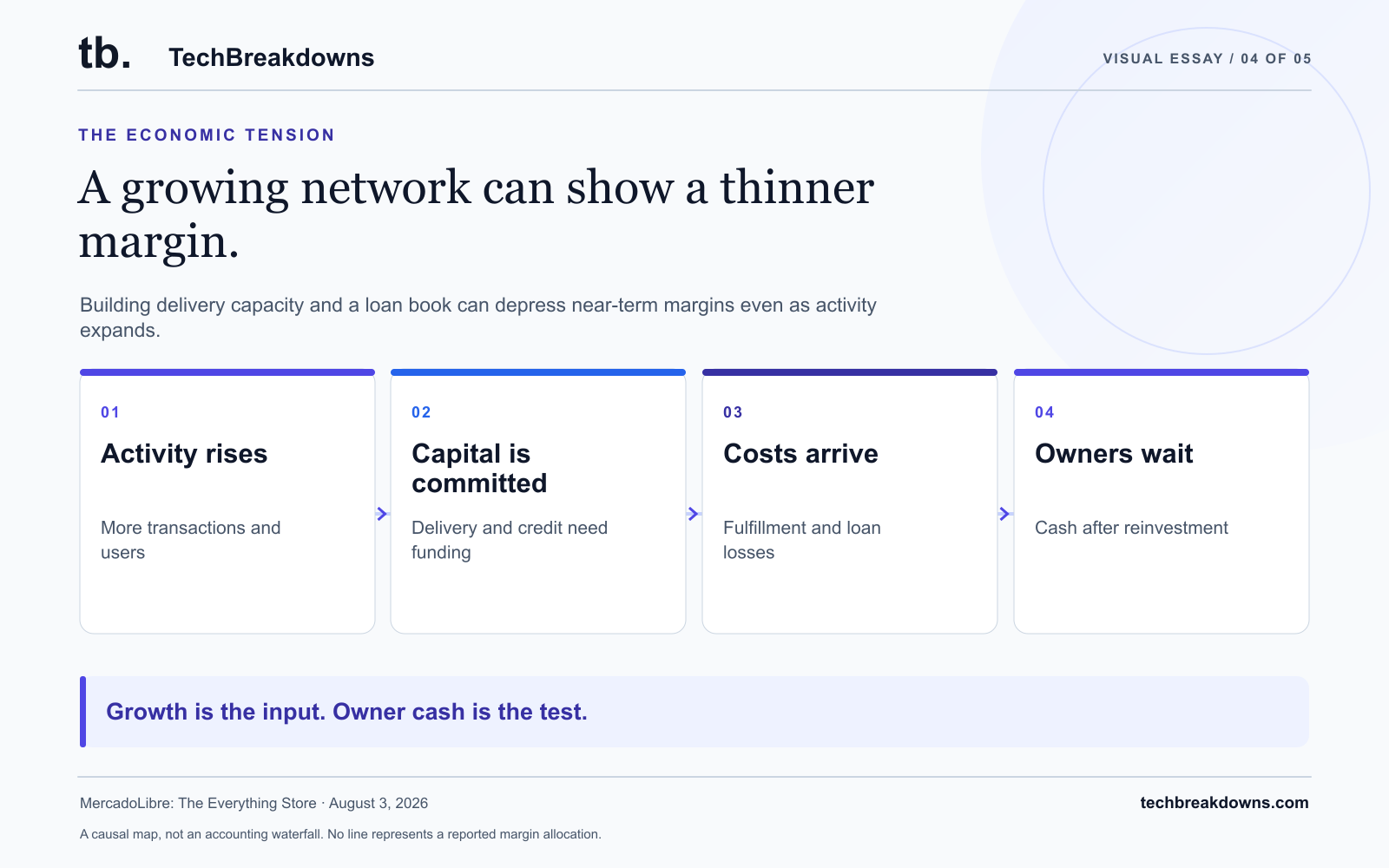
A growing network can show a thinner margin.
Building delivery capacity and a loan book can depress near-term margins even as activity expands. The return on that investment has to emerge after funding and credit losses.
A causal map, not an accounting waterfall. No line represents a reported margin allocation.
 Enlarge graphic
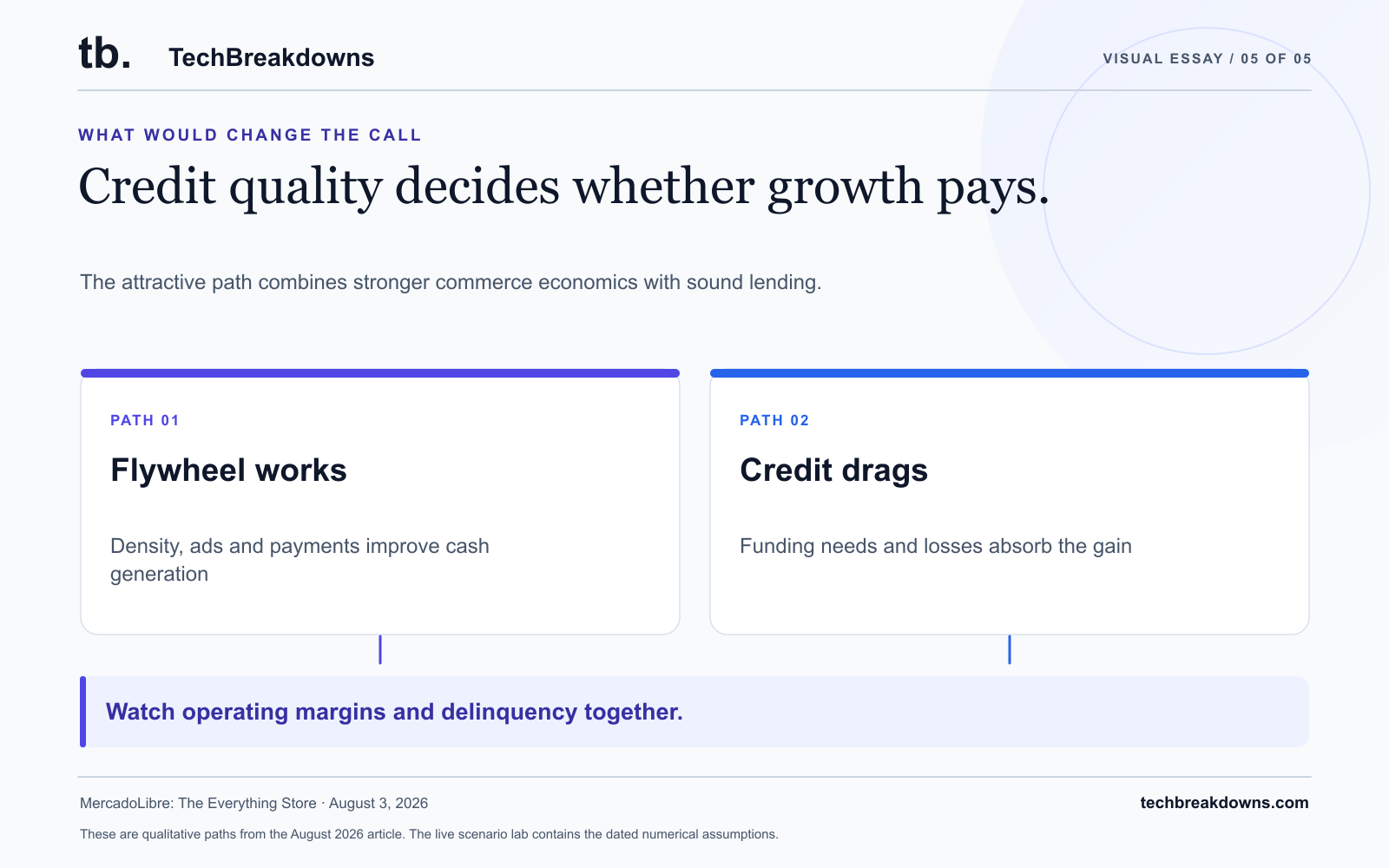
WHAT WOULD CHANGE THE CALL
Credit quality decides whether growth pays.
The attractive path combines stronger commerce economics with sound lending. The failure path is a larger credit book that consumes the cash the ecosystem creates.
These are qualitative paths from the August 2026 article. The live scenario lab contains the dated numerical assumptions.
THE OVERVIEW
First, understand
the business.
The idea, the advantage,
and the question that matters.
A merchant wants to sell, get paid and deliver the order. Then the merchant needs working capital. MercadoLibre keeps answering the next problem. That makes the ecosystem more useful, while making its economics much harder to read.
What it does
MercadoLibre brings together a Latin American marketplace, logistics, advertising, payments and lending. Commerce gets people transacting; Mercado Pago reaches customers on and beyond the marketplace. Lending adds another relationship, but it also needs funding and absorbs losses when borrowers cannot repay.
Why it might win
The research thesis is that commerce, delivery and payments reinforce one another. A merchant can use more of the same ecosystem as its business grows. Greater activity can support delivery density and advertising, provided those benefits exceed the cost of building and defending the network.
What could break
A growing loan book can make revenue look exciting while consuming cash. Shipping investment and competition can also squeeze margins. The test is whether reinvestment produces attractive economics after credit losses, funding and capital needs, rather than simply a larger business.
01 / THE STORY
Follow the business before the stock.
Can commerce, payments and credit reinforce one another while leaving cash for shareholders?
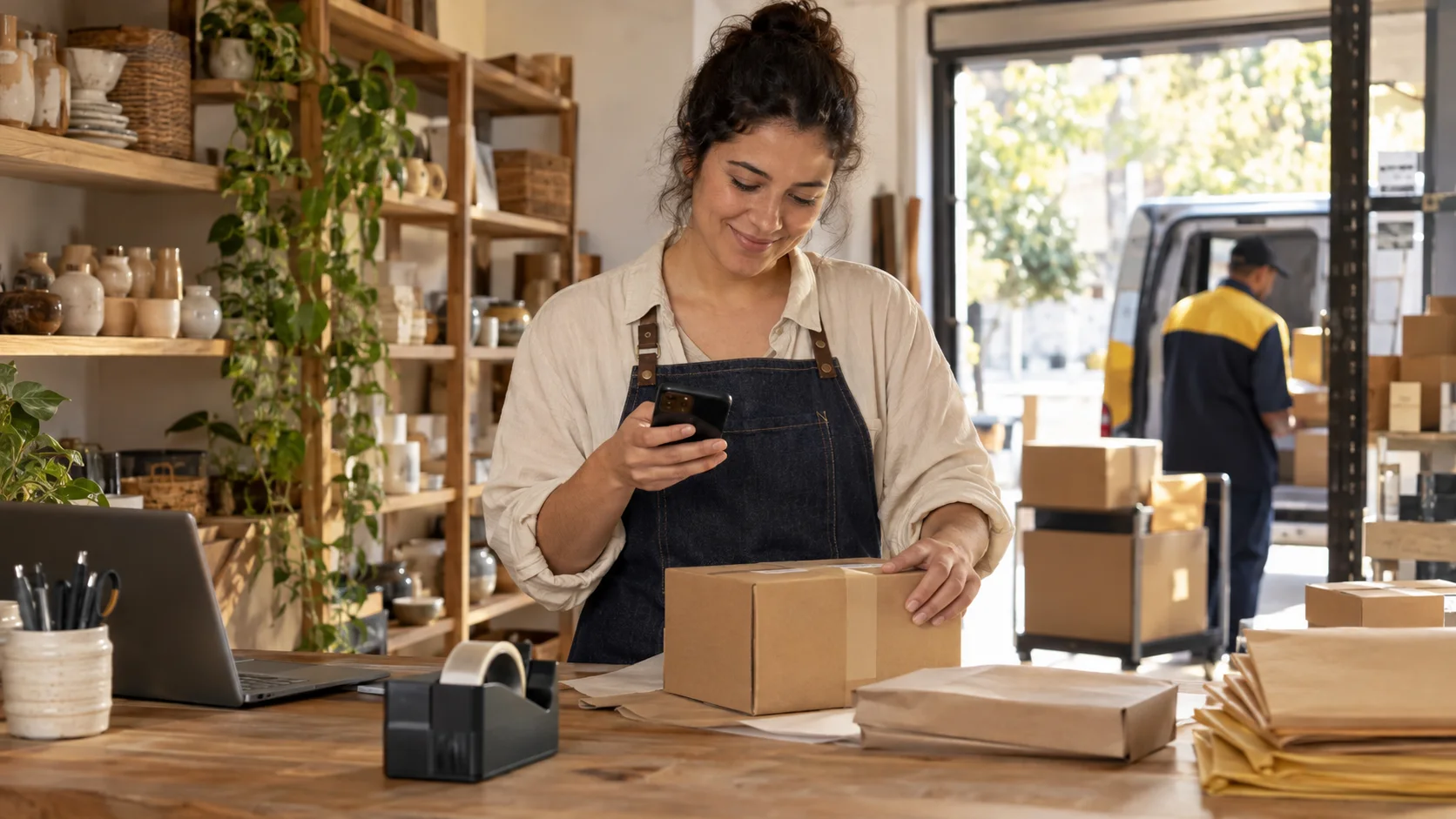
Solve the next merchant problem
Commerce is the entry point. Delivery and payment services make the transaction easier, and each additional useful service gives the merchant another reason to stay in the ecosystem.
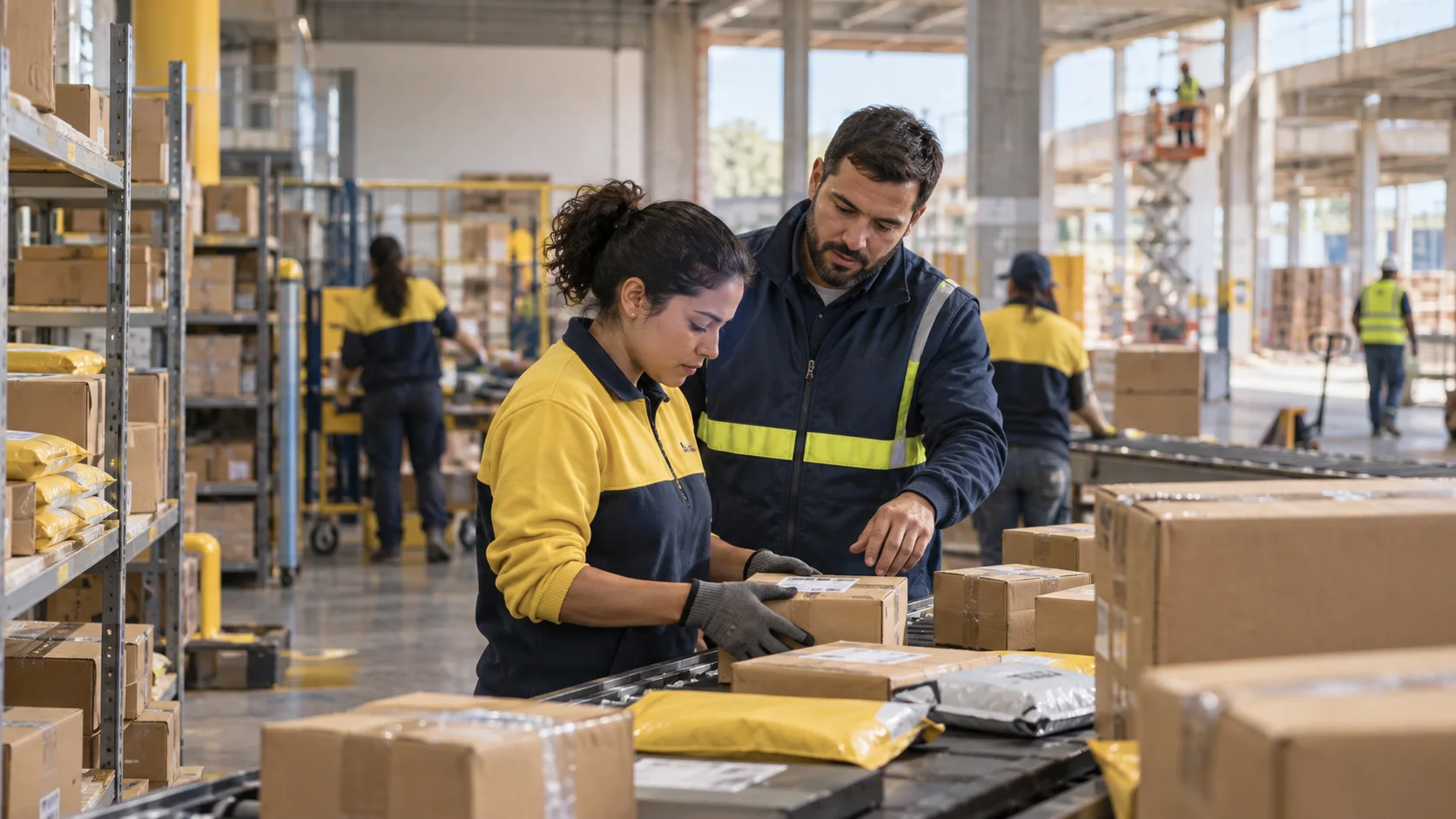
Reinvestment has an opportunity cost
Spending on delivery, customer acquisition and credit can trade today's cash for a stronger future business. A lower margin needs an explanation and evidence; calling it reinvestment is not enough.
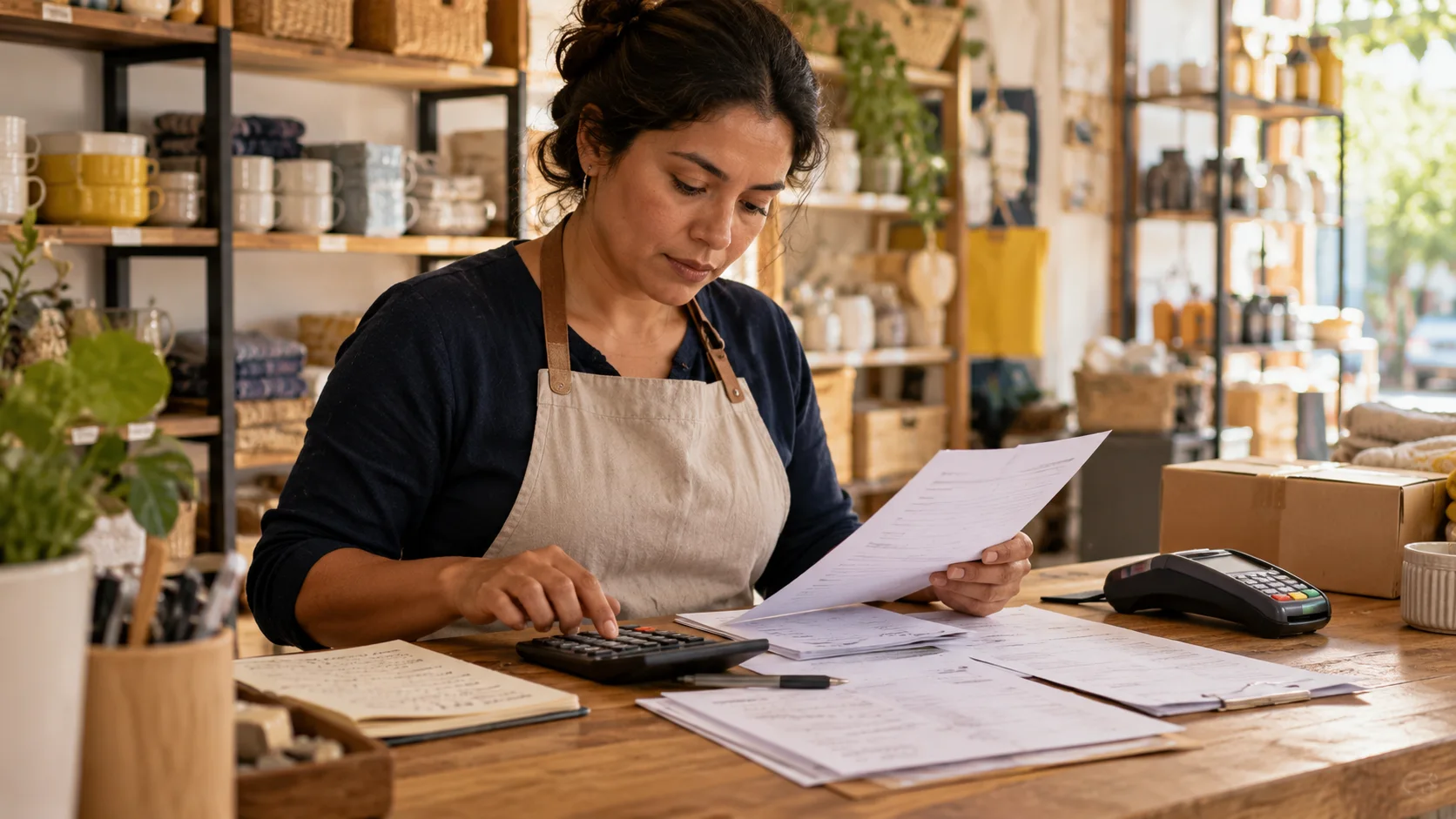
The bank changes the calculation
The model follows cash left after loan funding, losses and capital needs. Customer balances and fintech borrowing are not spare cash for shareholders. Better conversion, not just bigger loans, drives the upside.
Who pays, and why?
Shoppers
Buy goods through the marketplace and expect reliable delivery.
Merchants
Use marketplace, advertising, fulfillment and payment tools to sell.
Payment and credit users
Use Mercado Pago and borrowing products beyond the shopping cart.
Find the revenue engine.
Each business has a different path from customer activity to value per share. These are the levers used in the model.

Commerce and ads
Shopping activity gives merchants demand, while fulfillment and ads may improve the selling experience.
Payments & financial services
Mercado Pago can serve both marketplace transactions and activity beyond the store.

Credit
Lending can deepen the relationship, but funding and losses determine whether growth becomes owner cash.

Cash retained
Logistics, payments and lending compete for capital before owners receive the residual.
Commerce, payments and credit follow the published model buckets. Allocated cash margins are analyst assumptions. See dated sources
THE BUSINESS
How the story becomes a business.
Bring more activity together
Marketplace sales, delivery and payment use deepen customer and merchant relationships.
Fund the next layer
Logistics and lending require cash today before their future economics can be judged.
Measure what can leave
Value comes from cash available to equity after losses, investment and credit funding.
Loading reported business flow…
THE VALUATION MODEL
One business.
Three possible futures.
The business is the same. The assumptions change.
Choose a case, then make it your own.
Each number is a modeled ending, not a reported result.
What needs to happen?
Change the main drivers here. Then view the money flow or open the full model below.
Explore the other businesses
Give each business its own growth and cash margin. Every change flows into this same scenario.
Reference price —
SEE THE MODEL IN MOTION
See where the money goes.
The sliders above shape one scenario. Follow its annual money flow below, then open the full inputs if you want to go deeper.
Open the interactive diagramMove through the modeled years
Follow the money, year by year.
Each ribbon uses the same dollar scale across this scenario. Move through the modeled years to see what changes.
Swipe sideways to follow the full flow →
This diagram traces annual revenue into cash and owner economics; ribbons do not represent payments between these businesses.
Advanced assumptions and annual tableAdjust the full model and inspect each year
THE THESIS TEST
What to watch for?
- 01
Commerce earns its expansion
Compare marketplace growth and advertising monetization with delivery investment and competitive pricing pressure.
- 02
Payments travels beyond the store
Watch payment activity outside the marketplace and whether growing use brings stronger cash conversion.
- 03
Loans become owner cash
Track delinquency, losses and cash retained to fund credit. Loan growth alone does not establish shareholder value.
IN THE TECHBREAKDOWNS SYSTEM
Where MercadoLibre sits.
Follow MercadoLibre into the market it serves, the indices that track its stage, and the model portfolios that hold it.
Stores & marketplaces
Marketplace, Mercado Pago and Mercado Envios ecosystem
Also at this stage Instacart, Amazon, Walmart, Target, Costco, eBay and 7 more.
Warehouses & robots
Mercado Envios logistics and fulfillment
Also at this stage Symbotic, GXO Logistics, Manhattan Associates, Descartes, Zebra Technologies, Cognex and 3 more.
Shipping & delivery
Mercado Envios delivery network
Also at this stage UPS, FedEx, DHL Group, Amazon, Uber, DoorDash and 3 more.
Checkout & payments
Mercado Pago payment acceptance and financial services
Also at this stage Adyen, dLocal, Fiserv, Global Payments, PayPal, Block and 8 more.
Index member
MercadoLibre is 0.66% of the cap-weight index and 1.39% of the equal-weight index, as of Oct 6, 2026.
Reinvestors
Held since Aug 12, 2026: −7.7% from its logged entry price through Oct 1, 2026. It passes the current screen.